Birdwatching in the Florida Keys: Species You’ll Encounter
Share:
A Birdwatcher’s Paradise: What Species Will You See in the Florida Keys?
Birdwatching in the Florida Keys. The Florida Keys sit at the southern tip of the Atlantic Flyway, a migration corridor that stretches from arctic Canada to the Caribbean. That position makes the islands one of the most concentrated birding destinations in the continental United States, with more than 300 documented species across the chain. Whether you’re scanning the shallows from a vacation rental dock in Marathon or hiking the hammock trails at Crane Point, you’re likely to spot wading birds, raptors, shorebirds, and tropical species that don’t exist anywhere else in the Lower 48.
Quick Answer: The Florida Keys host over 300 bird species across wading birds, raptors, seabirds, and Caribbean specialties, with peak diversity during spring and fall migration (March through May and August through November).
What Birds Can You See in the Florida Keys Year-Round?
Several species call the Keys home 12 months a year, and they’re the ones you’re most likely to see from your rental’s dock or balcony. These residents have adapted to the islands’ mix of mangrove forest, tidal flats, and open water.
Great White Heron
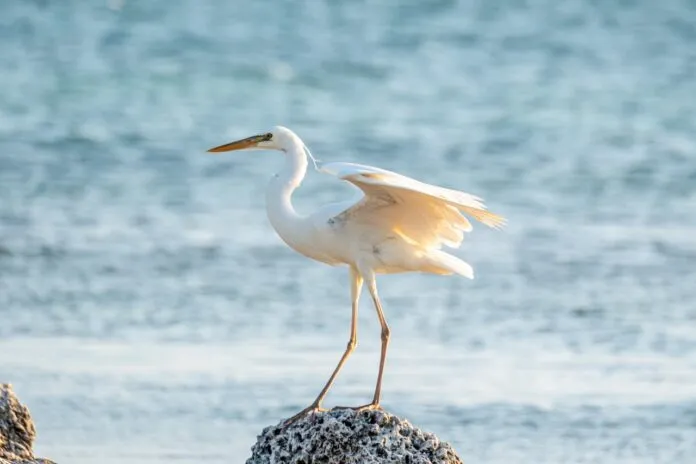
The Great White Heron is actually a white color morph of the Great Blue Heron, and it’s found almost exclusively in the Florida Keys. Standing nearly four feet tall with a wingspan around 66 inches, these birds patrol the shallow flats and canal edges throughout Marathon and Key Colony Beach. The Great White Heron National Wildlife Refuge was established in 1938 specifically to protect them. You’ll often see them standing motionless in ankle-deep water behind waterfront properties, waiting to strike at passing fish.
Brown Pelican
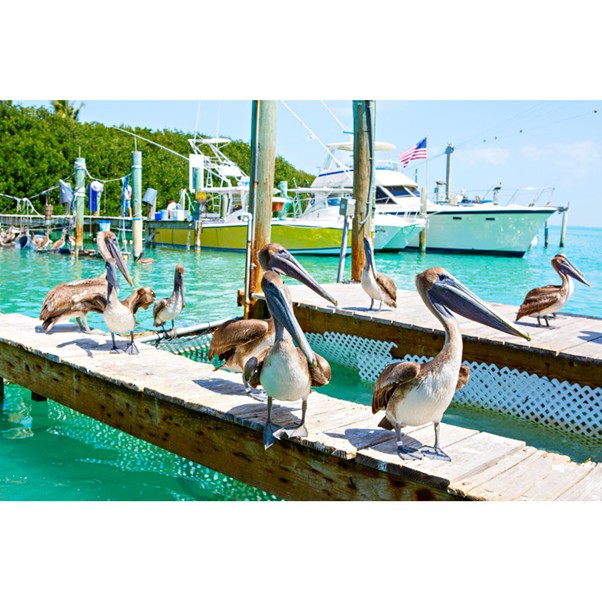
Brown Pelicans are everywhere in the Keys. They’re the smaller of the pelican species and one of only two that plunge-dive for fish. Watch the canals near any Marathon dock and you’ll see them folding their wings and dropping headfirst into the water. They perch on pilings, channel markers, and dock posts between dives. During winter months, their numbers increase as birds from northern populations move south.
Osprey
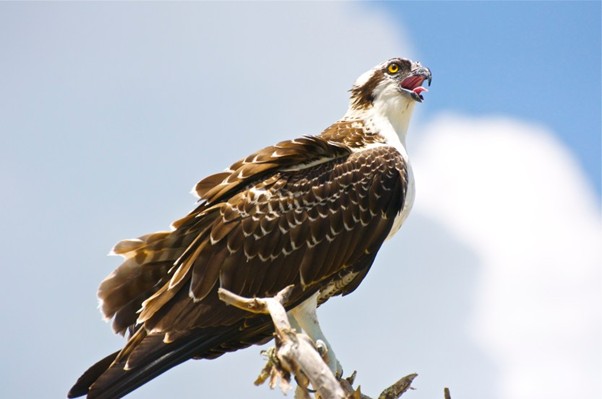
Ospreys are one of the most common raptors in the Middle Keys. Their bulky stick nests sit on top of power poles, channel markers, and dead trees along the Overseas Highway. With a wingspan of roughly 71 inches and a distinctive dark eye stripe, they’re easy to identify even at a distance. Ospreys hunt by hovering over the water and diving feet-first to grab fish, and they’re active throughout the day. Many VPVR guests photograph them from the private docks at properties like Blue Pearl or Emerald Oasis.
Magnificent Frigatebird
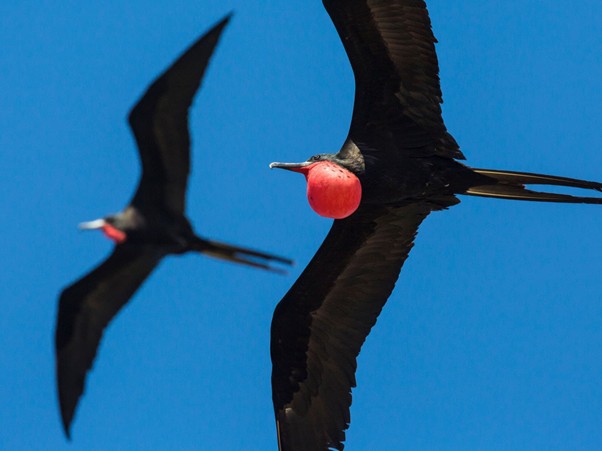
Look up on any windy afternoon and you’ll likely spot Magnificent Frigatebirds soaring high over the Keys on long, angular wings. Males are entirely black with a red throat pouch they inflate during breeding season. Females have white chest patches. These birds almost never land on water because their feathers aren’t waterproof. Instead, they harass other birds mid-flight to steal their catches. At Curry Hammock State Park in Marathon, counters have tallied over 400 frigatebirds in a single day during fall migration.
Which Wading Birds Live in the Florida Keys?
The Keys’ shallow flats, mangrove-lined shorelines, and tidal pools create some of the best wading bird habitat in North America. These are the species you’ll encounter most often in the shallows.
Roseate Spoonbill
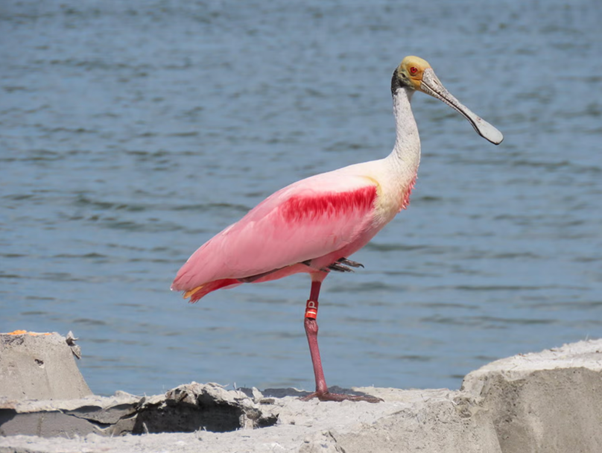
The Roseate Spoonbill is the bird that stops first-time Keys visitors mid-sentence. They’re bright pink, about 32 inches tall, and they feed by sweeping their flat, spoon-shaped bills side to side through shallow water. Their color comes from carotenoid pigments in the shrimp and crustaceans they eat. Spoonbills forage on tidal flats and in mangrove pools throughout the Middle and Lower Keys. They’re not flamingos, though visitors mistake them for flamingos constantly.
Reddish Egret
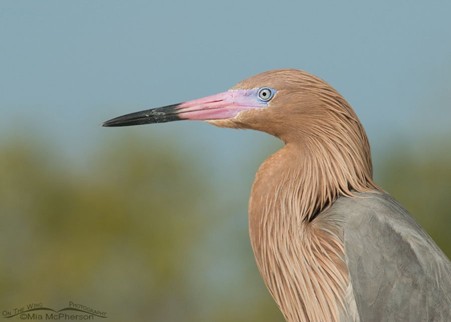
Reddish Egrets are the acrobats of the wading bird world. They feed by running, jumping, and spinning through the shallows with their wings spread, a technique called “canopy feeding” that creates shade to attract fish. They come in two color morphs: a dark reddish-brown version and a white version that looks nothing like the dark morph. Both have a distinctive shaggy neck. The Florida Fish and Wildlife Conservation Commission lists the Reddish Egret as state-threatened, so spotting one feels earned.
White Ibis
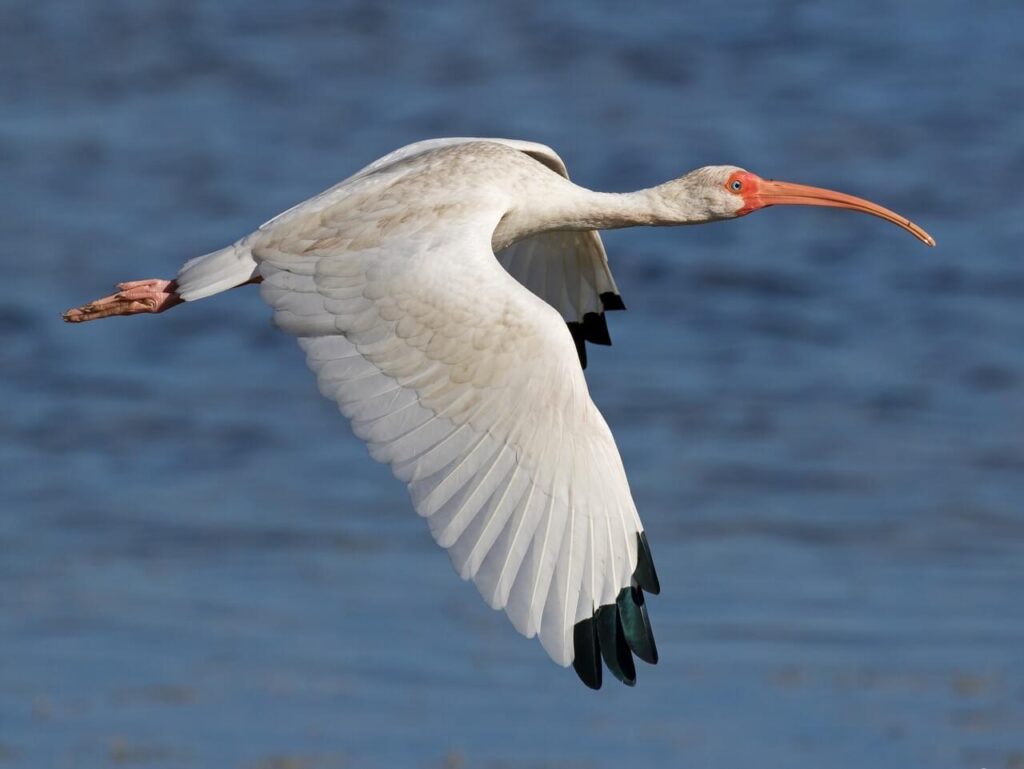
White Ibis travel in flocks, probing mud and grass with their long, down-curved orange bills. You’ll see them in neighborhoods, on roadsides, and across the tidal flats of Marathon. They nest colonially in mangrove trees and are often the most abundant wading bird in the Keys on any given day. Juveniles are brown and white, which confuses new birders who expect the all-white adult plumage.
What Are the Best Birdwatching Spots Near Marathon?
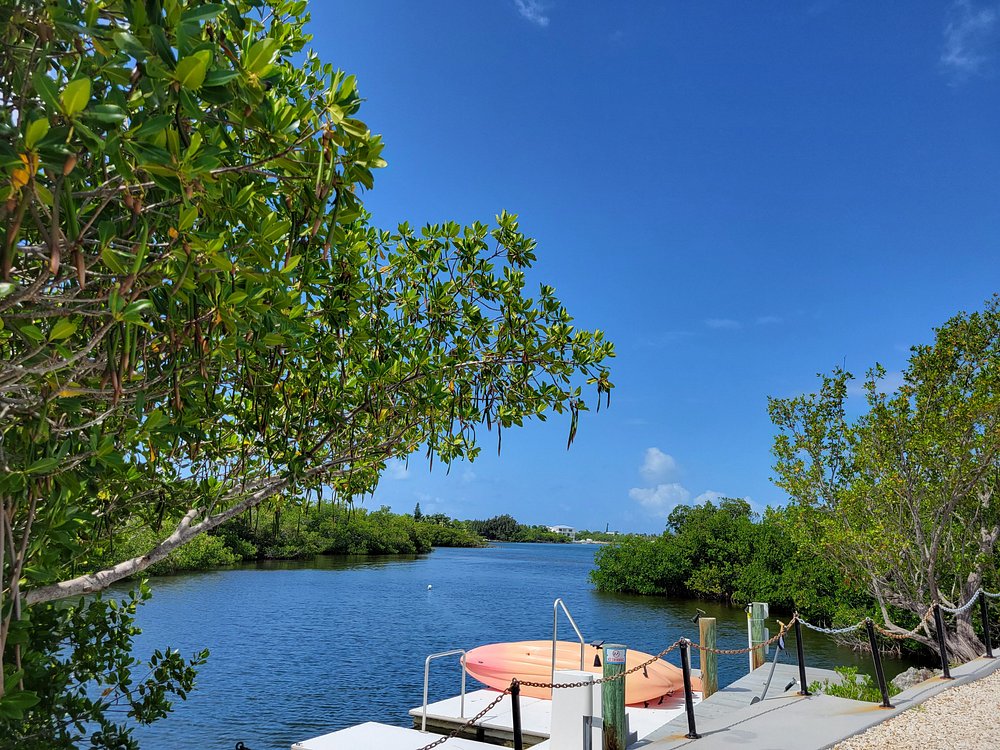
Marathon and the surrounding Middle Keys offer several concentrated birding locations, each with different habitats and species.
- Crane Point Museum and Nature Center (MM 50.5): This 63-acre tropical hardwood hammock in the heart of Marathon is home to the Marathon Wild Bird Center, which rehabilitates injured pelicans, egrets, hawks, and cormorants. The nature trails wind through one of the last intact hardwood hammocks in the Middle Keys. Migrant warblers pass through during spring and fall. Admission is $14.95 for adults. Learn more about Crane Point.
- Curry Hammock State Park (MM 56.2): The headquarters for the Florida Keys Hawkwatch, which runs August through November. On October 10, 2015, counters at Curry Hammock tallied a world-record 1,506 Peregrine Falcons in a single day. The 1.5-mile nature trail cuts through rockland hammock where you can spot White-crowned Pigeons, Black-whiskered Vireos, and migrating songbirds. Day-use entry is $5 per vehicle. Visit Curry Hammock State Park.
- Marathon Government Center area (MM 48.5): During summer, Roseate and Least Terns sometimes nest on rooftops here. It’s not a formal birding site, but it produces reliable sightings.
- Boot Key Harbor and waterfront canals: The canal systems behind Marathon’s residential areas draw herons, pelicans, cormorants, and ospreys year-round. Guests staying at our waterfront vacation rentals often spot multiple species without leaving the property.
When Is the Best Time for Birding in the Florida Keys?
Timing matters in the Keys. Different seasons bring completely different species and behavior.
| Season | What You’ll See | Highlights |
| Spring (March-May) | Northbound migrants, breeding Caribbean species | Warblers, vireos, herons nesting, Antillean Nighthawks arrive |
| Summer (June-August) | Resident seabirds, breeding waders | Frigatebirds, tern colonies, Roseate Spoonbills feeding young |
| Fall (August-November) | Raptor migration, Hawkwatch season | Peregrine Falcons, Broad-winged Hawks, Swallow-tailed Kites |
| Winter (December-February) | Northern visitors, overwintering species | Warblers, sparrows, occasional rare vagrants from cold fronts |
Spring migration is the single best window for species diversity. Migrants heading north from Central and South America funnel through the Keys, and Caribbean breeding birds like the Black-whiskered Vireo and Antillean Nighthawk arrive for the summer. Fall brings a different show, with thousands of raptors streaming south along the Atlantic Flyway. The Florida Keys Hawkwatch at Curry Hammock is one of the best places in the country to witness it.
What Rare and Specialty Birds Should You Look For?
The Keys harbor several species that are difficult or impossible to find elsewhere in the continental United States. These are the birds that draw dedicated birders from across the country.
White-crowned Pigeon
White-crowned Pigeons are shy, dark-gray birds with a bright white cap. They nest almost exclusively in mangrove forests on small offshore islands and fly to the mainland to feed on fruit in hardwood hammocks. The Florida Fish and Wildlife Conservation Commission considers them state-threatened due to habitat loss. Big Pine Key and the hammocks around Marathon are reliable spots.
Mangrove Cuckoo
The Mangrove Cuckoo might be the hardest regularly-occurring bird to find in the United States. It stays deep inside mangrove and tropical hammock habitat, rarely showing itself. It’s more often heard than seen, giving a guttural “gawk-gawk-gawk” call. Big Pine Key and Key Largo offer the best chances, but patience and luck are both required.
Black-whiskered Vireo
This Caribbean species breeds in the Keys and parts of South Florida from April through August, then returns to the tropics. It looks similar to the widespread Red-eyed Vireo but has a distinctive dark “whisker” stripe below its bill. Listen for its repetitive, wheezy song in hardwood hammocks and mangrove edges at Dagny Johnson Key Largo Hammock Botanical State Park and Crane Point in Marathon.
Antillean Nighthawk
At dusk during summer months, Antillean Nighthawks appear over Marathon Airport and other open areas in the Keys, swooping after insects in the fading light. They look nearly identical to Common Nighthawks but have a distinctive buzzy “pit-pit-pit” call. Marathon Airport (MM 53) is the most reliable spot for them.
What Birding Gear Should You Pack for a Florida Keys Trip?
You don’t need expensive equipment to enjoy birding in the Keys, but a few items make the experience dramatically better.
A decent pair of binoculars in the 8×42 range works well for most Keys birding because you’re often watching birds at moderate distances across open water and flats. Spotting scopes help for shorebird identification on distant mudflats but aren’t essential. Bring a wide-brimmed hat, polarized sunglasses (they cut the glare off the water and let you see birds in the shallows more clearly), and reef-safe sunscreen. Mosquito repellent is non-negotiable for trail birding from May through October.
The free Merlin Bird ID app from the Cornell Lab of Ornithology identifies species by sound and photograph, and it works offline once you download the Florida pack. For tracking your sightings, eBird lets you log observations and check which species other birders have reported recently at local hotspots.
How Does the Great Florida Birding Trail Connect to the Keys?
The Great Florida Birding and Wildlife Trail is a 2,000-mile, self-guided driving trail managed by the Florida Fish and Wildlife Conservation Commission. The South Section stretches from Lake Okeechobee through the Everglades and down through the entire Keys chain to the Dry Tortugas, 70 miles beyond Key West.
The trail designates specific sites based on habitat quality and species diversity, and several stops fall within easy reach of Marathon. Curry Hammock State Park, the National Key Deer Refuge on Big Pine Key, and Crane Point Hammock are all official Birding Trail sites. The Florida Keys Wildlife Society maintains additional resources for planning birding visits to the four National Wildlife Refuges in the Keys, which collectively protect habitat for over 250 bird species.
For birders willing to extend their trip, the Dry Tortugas (reachable by ferry or seaplane from Key West) are one of the most spectacular migration stopover sites in North America, with over 300 documented species and the only mainland U.S. breeding colony of Sooty Terns.
Where to Stay for a Birding Trip in the Florida Keys
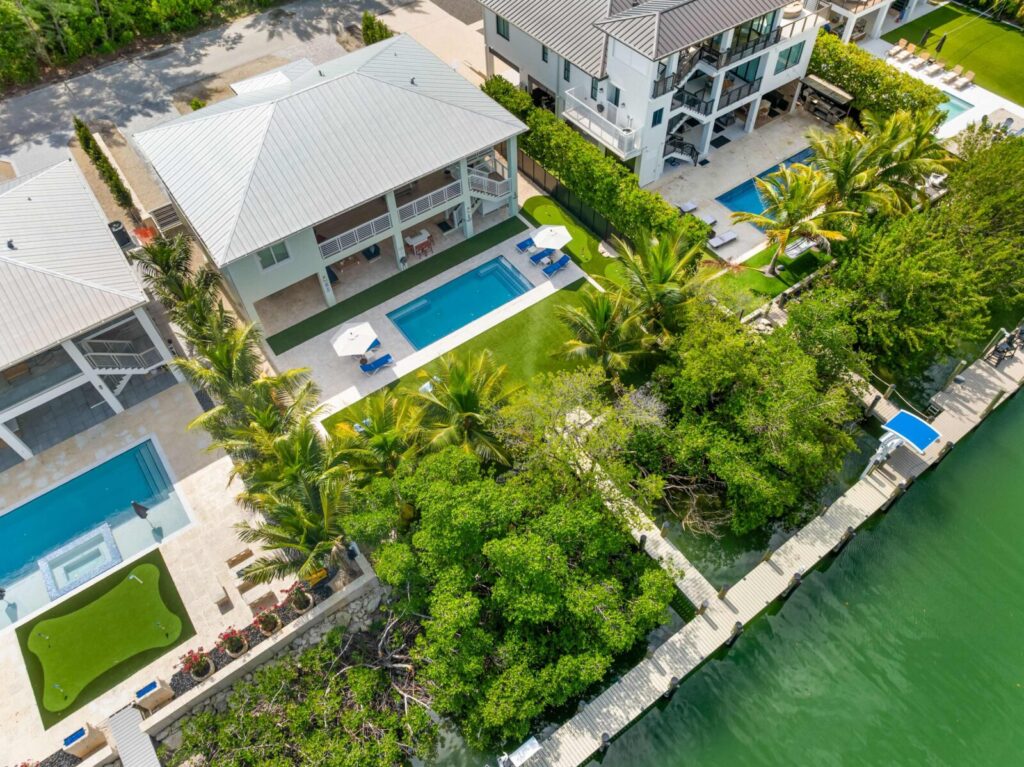
Marathon and Key Colony Beach put you in the geographic center of the Keys’ best birding territory. Curry Hammock State Park is a 10-minute drive north, Crane Point is right in town, and Big Pine Key’s National Key Deer Refuge is 25 minutes south.
Our waterfront vacation rentals in Marathon come with private docks where Great White Herons, Brown Pelicans, Ospreys, and Double-crested Cormorants are regular visitors. Several properties, including Deep Blue and Ocean Muse, overlook open water and canal systems that attract wading birds at all hours. Properties with kayak access like Emerald Oasis let you paddle silently into mangrove channels where roosting birds are often just a few feet away.
Book direct at paraisovacationrentals.com and use code DIRECT15 to save 15% compared to third-party booking platforms.
FAQ’s
How many bird species are found in the Florida Keys?
More than 300 bird species have been documented across the Florida Keys, including the Dry Tortugas. The Florida Keys Audubon Society’s official checklist lists 354 species. These include year-round residents like Great White Herons and Ospreys, Caribbean breeders like Black-whiskered Vireos, and hundreds of migratory species that pass through during spring and fall.
What is the best time of year for birdwatching in the Florida Keys?
Spring migration (March through May) offers the highest species diversity, with northbound migrants, arriving Caribbean breeders, and active nesting by resident waders. Fall (August through November) brings raptor migration, including Peregrine Falcons and Swallow-tailed Kites at the Florida Keys Hawkwatch. Winter cold fronts occasionally push rare species into the Keys.
Where can I see Roseate Spoonbills in the Florida Keys?
Roseate Spoonbills feed on tidal flats and in shallow mangrove pools throughout the Middle and Lower Keys. The flats around Marathon, the shorelines of Key Colony Beach, and the National Key Deer Refuge on Big Pine Key are all reliable areas. Early morning low tides concentrate spoonbills in the remaining shallow water.
Is Marathon FL good for birdwatching?
Marathon is one of the best birding locations in the Keys. Crane Point Museum and Nature Center offers 63 acres of hardwood hammock and a wild bird rehabilitation center. Curry Hammock State Park hosts the nationally recognized Florida Keys Hawkwatch. The town’s canals and docks attract herons, pelicans, ospreys, and cormorants year-round.
What is the Florida Keys Hawkwatch?
The Florida Keys Hawkwatch is a raptor migration monitoring project based at Curry Hammock State Park in Marathon. It runs from August through November and is the southernmost migration monitoring project in the continental United States. On October 10, 2015, counters recorded a world-record 1,506 Peregrine Falcons in a single day. Volunteers welcome visitors and help identify species.
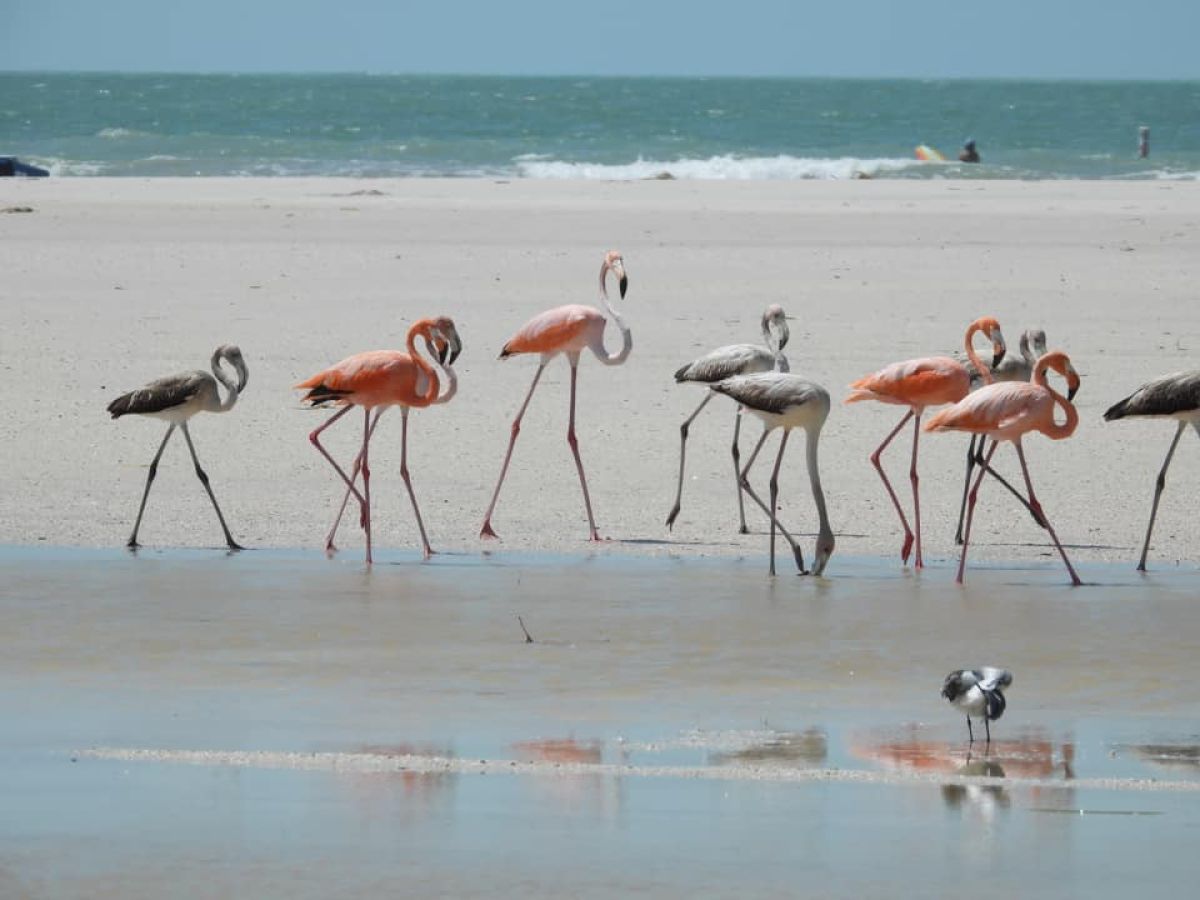
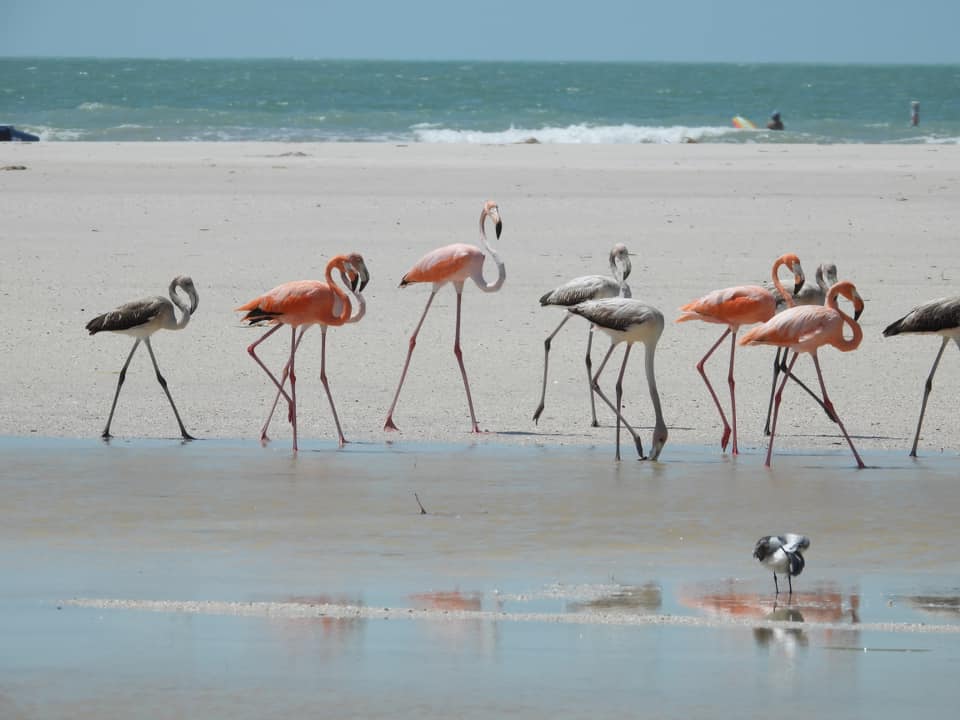
Can you see flamingos in the Florida Keys?
Flamingos are occasionally spotted in the Florida Keys’ shallow coastal waters, but sightings are uncommon. The bright pink birds visitors frequently notice are usually Roseate Spoonbills, which are abundant in the Keys and are often mistaken for flamingos. Spoonbills have a flat, spoon-shaped bill and shorter legs compared to flamingos.
Where should I stay for a birding trip to the Florida Keys?
Marathon and Key Colony Beach offer central access to the Keys’ top birding destinations, including Crane Point, Curry Hammock State Park, and the National Key Deer Refuge on Big Pine Key. Waterfront vacation rentals with private docks provide built-in bird viewing. Villa Paraiso Vacation Rentals manages properties across Marathon with direct waterfront access where guests regularly spot herons, ospreys, pelicans, and other species from their backyard.