Marine life in Marathon, Florida Keys waters (and how to respect them)
Share:
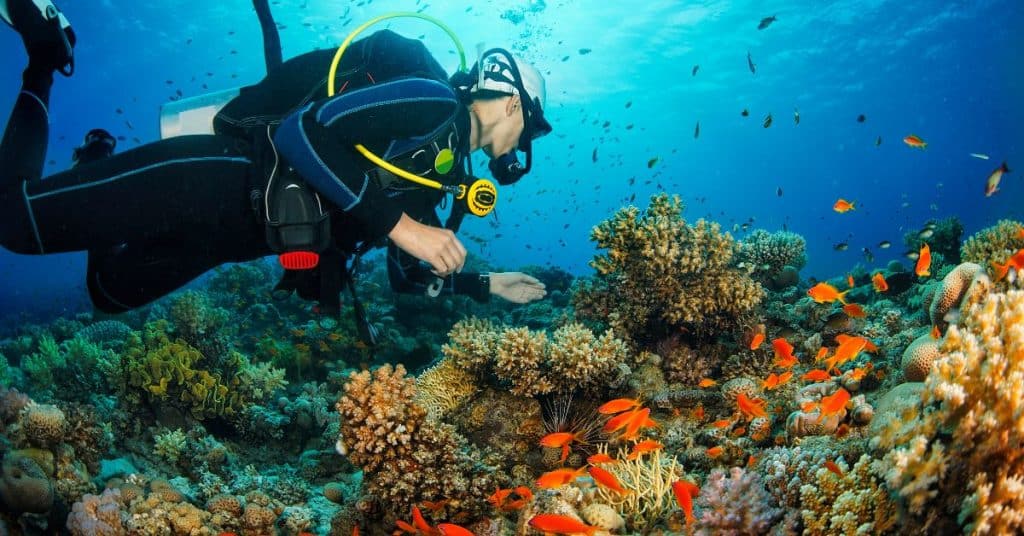
What marine life in Marathon, Florida Keys will you see ?
Marathon sits in the middle of the Florida Keys, surrounded by the Atlantic Ocean on one side and the Gulf of Mexico on the other. That geographic position puts visitors within reach of coral reefs, shallow grass flats, mangrove shorelines, and deep offshore waters, each home to different animals. From sea turtles and bottlenose dolphins to parrotfish, nurse sharks, and spotted eagle rays, the waters around Marathon support hundreds of species inside the 3,800-square-mile Florida Keys National Marine Sanctuary.
Quick answer: You can encounter sea turtles, dolphins, manatees (winter), nurse sharks, barracuda, tarpon, stingrays, parrotfish, grouper, lobster, and dozens of coral species while snorkeling, diving, fishing, or kayaking in Marathon.
What fish and marine animals live on Marathon’s coral reefs?
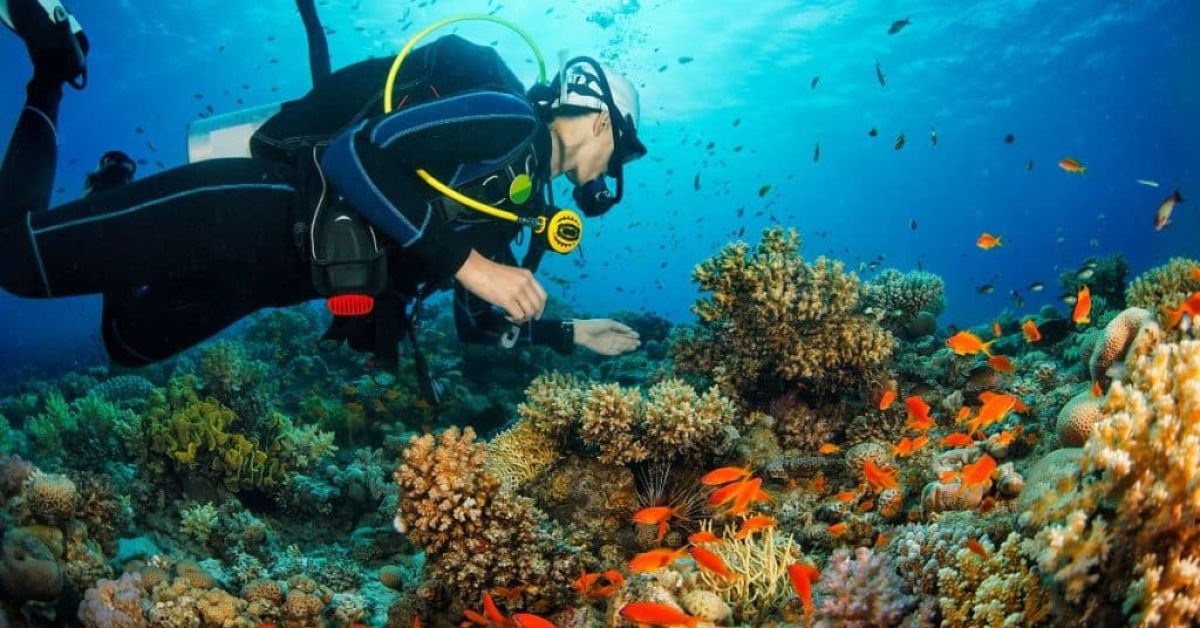
Marathon’s reef system includes an extensive spur-and-groove coral complex and well-developed patch reefs in the Atlantic waters offshore. Coffin’s Patch alone is a group of six distinct patch reefs, each dominated by a different coral species, with shallow elkhorn forests in less than 20 feet of water. Delta Shoals offers coral canyons filled with brain and star coral heads.
The animals you’ll find on these reefs include:
- Queen angelfish: Bright blue and yellow, often seen near sea fans and sponges on the reef wall
- Parrotfish: These reef-maintenance workers bite off chunks of dead coral, digest the algae, and excrete fine white sand. Much of the sand on Florida Keys beaches started in a parrotfish’s gut
- Yellowtail snapper: Schools of these fish hover above the reef, often curious enough to approach divers
- Nurse sharks: Bottom-dwelling and generally docile, often found resting under ledges during the day. They can grow to 10 feet
- Spotted eagle rays: Graceful swimmers with distinctive white spots on dark backs, commonly seen gliding over sandy flats between reef patches
- Moray eels: Green morays hide in reef crevices, poking out their heads. They look intimidating but are rarely aggressive unless provoked
- Spiny lobster: Florida’s famous crustacean hides in reef holes and ledges. Recreational harvest season runs from early August through March
- Barracuda: Solitary adults cruise reef edges, silver and fast. They’re curious but almost never a threat to people
- Hogfish: Prized by spearfishers, these reef dwellers change color depending on their environment
- Sea fans and soft corals: Not animals most people think of, but these filter-feeding colonies are animals, and they form the visual backdrop of every Keys reef dive
For guided reef access, Florida Keys Aquarium Encounters in Marathon (MM 53) offers hands-on encounters with over 50 species of tropical fish, rays, and sharks in tanks that replicate local reef environments. You can swim in their 200,000-gallon coral reef tank and hand-feed the fish, which is a useful introduction if you’re not comfortable with open-water snorkeling yet.
Which sea turtles live in the Florida Keys?
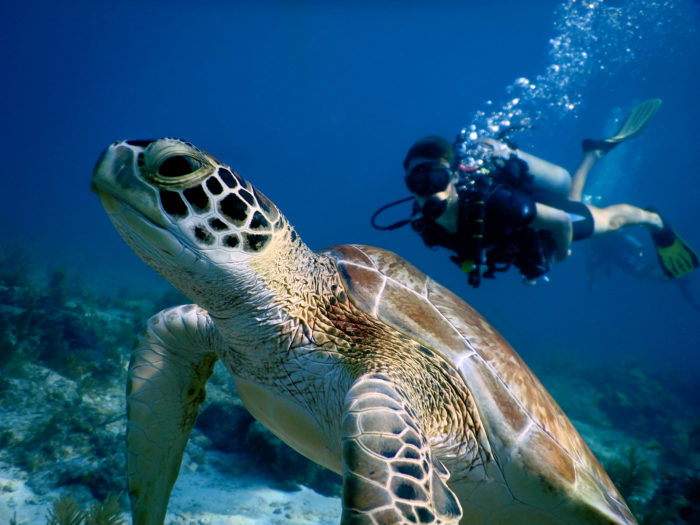
Five of the world’s seven sea turtle species live in Florida Keys waters: the Green sea turtle, Loggerhead, Hawksbill, Kemp’s Ridley, and Leatherback. All five are classified as either endangered or threatened under the Endangered Species Act.
Green sea turtles are the most commonly spotted in Marathon’s shallow waters, grazing on seagrass beds near canal-front docks and shorelines. Loggerheads are the most common nesting species on Florida beaches, with nesting season running from late spring through early summer. Leatherbacks, the largest sea turtles on Earth (up to 2,000 pounds), pass through deeper offshore waters during migration.
Where to learn about sea turtles in Marathon
The Turtle Hospital at mile marker 48.5 in Marathon is a nonprofit rescue and rehabilitation center that has treated and released over 1,500 sea turtles since opening in 1986. Guided 90-minute educational tours run throughout the day. Visitors learn about the threats turtles face, including boat strikes, fishing line entanglement, plastic ingestion, and fibropapilloma tumors that affect more than half of Green sea turtles in the Keys. Some turtles, like the hospital’s famous permanent resident Bubble Butt (struck by a boat off Long Key in 1989), cannot be released due to lasting injuries.
Tour reservations are strongly recommended, as the hospital accommodates about 40,000 visitors per year. Check current pricing at their website or call (305) 743-2552.
How to protect sea turtles during your visit
If you’re staying in a waterfront property, your everyday choices directly affect turtles:
- Dispose of all trash properly and recycle. Turtles eat plastic bags because they look like jellyfish.
- Cut apart six-pack rings and any looped packaging before disposing of it.
- During nesting season (April through October), turn off or shield beach-facing lights at night. Artificial light disorients hatchlings heading toward the ocean.
- Keep a safe distance while boating. Slow down in shallow channels where turtles feed.
- Never touch, chase, or attempt to ride a sea turtle. It’s illegal and harmful.
- If you encounter a sick or injured sea turtle, call the Florida Fish and Wildlife Conservation Commission hotline at 1-888-404-FWCC.
Can you see dolphins in Marathon?
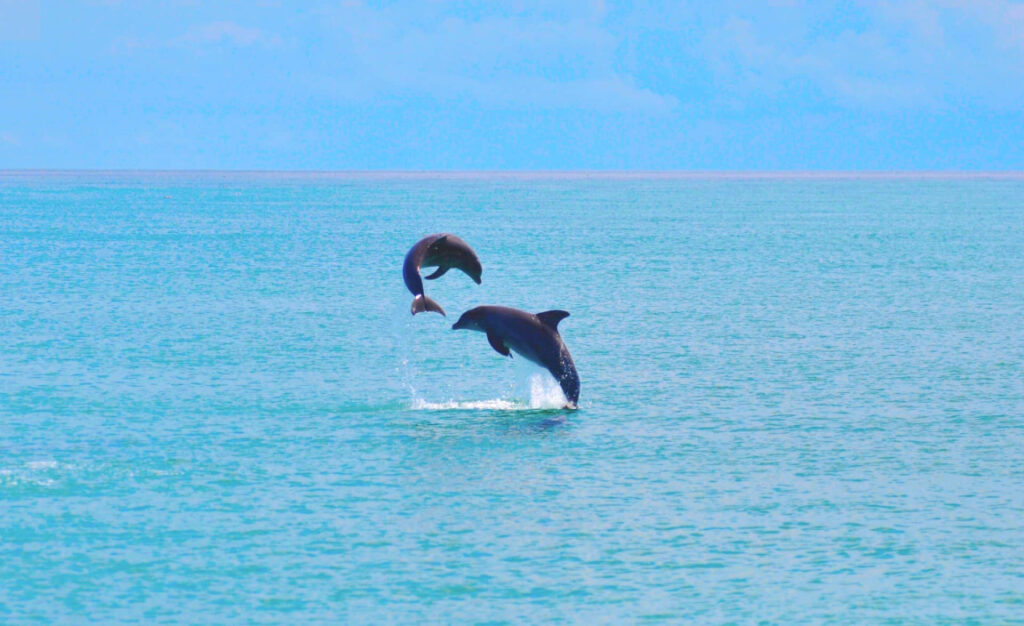
Bottlenose dolphins are year-round residents of the waters around Marathon. You’ll see them surfacing in canals, cruising alongside boats, and feeding in the shallows near the bridges. Our guests at waterfront properties regularly spot dolphins from their docks, particularly during early morning and late afternoon when the animals tend to be most active.
The Dolphin Research Center on Grassy Key (MM 59, about 10 minutes north of Marathon) is a nonprofit research and education facility that houses over two dozen dolphins and four sea lions. Founded in 1984, the center focuses on cognition, behavior, and husbandry research. General admission includes all-day access, scheduled educational presentations, and unscripted dolphin behavior viewing. Interactive swim encounters and painting sessions are available for separate fees.
Wild dolphin etiquette
When you see dolphins from a boat or dock:
- Watch from a distance. Federal law under the Marine Mammal Protection Act makes it illegal to harass, feed, or attempt to swim with wild dolphins.
- Don’t chase dolphins with your boat or jet ski. If dolphins approach your vessel on their own, maintain your speed and heading.
- Never feed wild dolphins. Feeding teaches them to associate humans with food, which puts both parties at risk.
- If a dolphin appears sick or stranded, contact FWC at 1-888-404-FWCC rather than attempting a rescue yourself.
What marine life will you see from your dock or kayak?
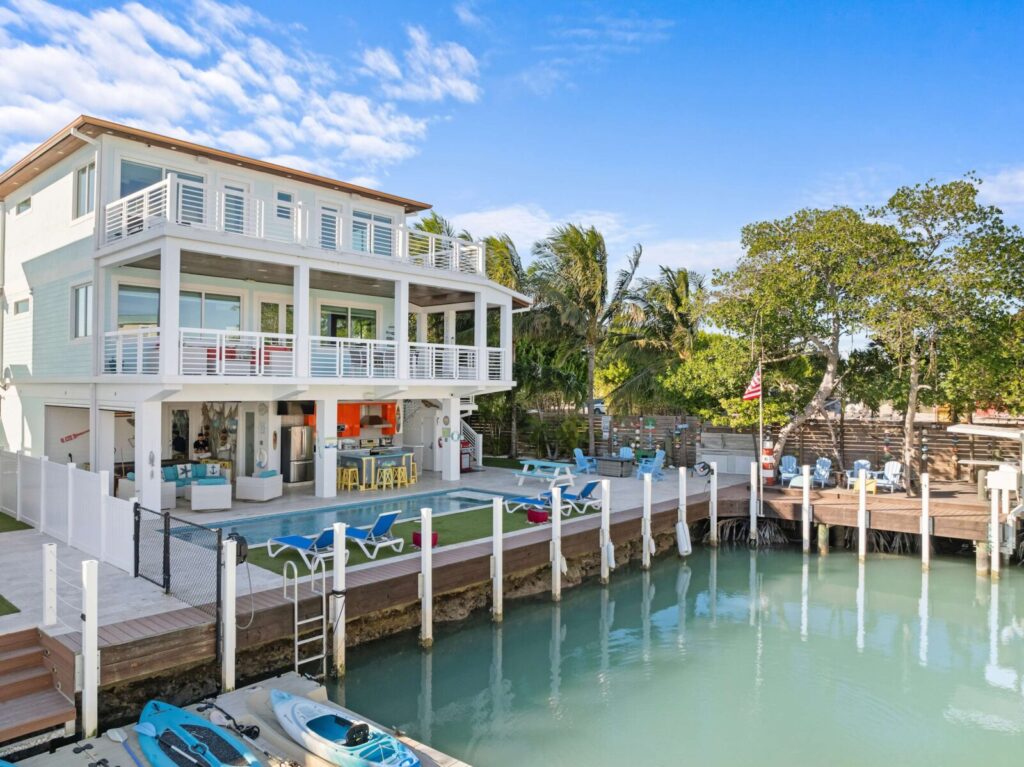
One of the benefits of staying at a canal-front or waterfront property in Marathon is the daily wildlife show right off your dock. Here’s what our guests commonly spot without leaving the backyard:
| Species | When you’ll see them | Where to look |
| Tarpon | Year-round, best in spring | Rolling at the surface in canals at dawn and dusk |
| Manatees | November through March | Slow-moving in warm canal waters |
| Nurse sharks | Year-round | Resting under docks and in canal shallows |
| Stingrays | Year-round | Gliding across sandy canal bottoms |
| Great blue herons | Year-round | Standing motionless on dock pilings |
| Pelicans | Year-round | Dive-bombing baitfish near docks |
| Barracuda | Year-round | Hovering near dock lights at night |
| Juvenile reef fish | Year-round | Schooling around dock pilings and seagrass |
Kayaking from a dock-equipped property adds mangrove channels to your range, where you might paddle past juvenile lemon sharks, horseshoe crabs, upside-down jellyfish, and schools of mullet. The seagrass beds near Curry Hammock State Park (MM 56.2) are particularly productive for kayak-based wildlife viewing.
What are the rules for interacting with marine life in Marathon?
Marathon falls entirely within the Florida Keys National Marine Sanctuary, which means specific federal regulations apply to everything you do in the water. In January 2025, NOAA issued the Restoration Blueprint final rule, which updated sanctuary-wide regulations and expanded marine zones to address threats like declining coral cover, water quality issues, and habitat damage from boats.
Here are the rules every visitor needs to know:
Things that are always illegal in the sanctuary:
- Touching, standing on, or breaking coral, whether it’s alive or dead
- Removing live rock (any rock with living organisms attached) from the water
- Anchoring on or near a coral reef. Use mooring buoys instead
- Feeding fish in open sanctuary waters
- Harvesting anything from Sanctuary Preservation Areas (SPAs)
- Damaging or disturbing seagrass by dragging anchors or running props through shallow beds
Fishing regulations:
The Florida Fish and Wildlife Conservation Commission (FWC) manages fishing rules that apply within the sanctuary. Regulations change by species and season. Before casting a line, check the FWC’s current saltwater recreational fishing regulations and make sure you have a valid Florida saltwater fishing license. The Fish Rules App (available on iOS and Android) provides location-specific regulations so you can check what’s open and what’s closed right from your phone.
Snorkeling and diving best practices:
- Maintain neutral buoyancy. Don’t kick the reef with your fins
- Look but don’t touch. Even seemingly harmless contact damages the thin tissue that protects living coral
- Don’t chase, grab, or ride any marine animal
- Use reef-safe sunscreen (mineral-based, without oxybenzone or octinoxate). These chemicals bleach coral. Monroe County banned the sale of sunscreens containing these ingredients in 2021
- Take only photos. Leave shells, sand dollars, and starfish where you find them
When is the best time to see marine life in Marathon?
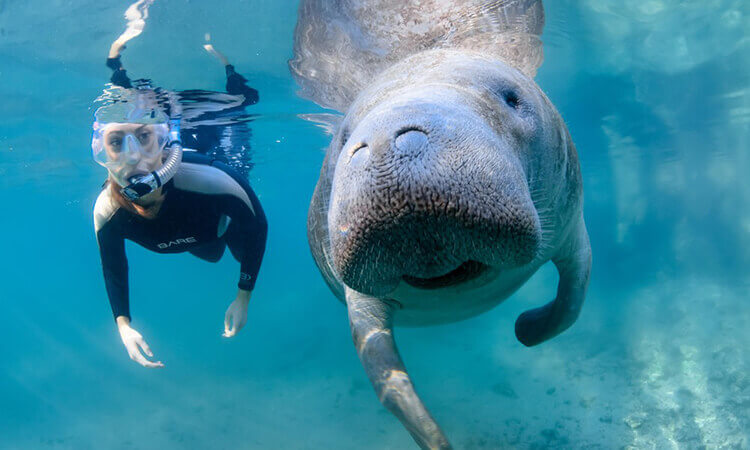
Marine activity shifts with the seasons. Here’s a month-by-month breakdown:
| Season | Water temp | What you’ll see |
| Winter (Dec-Feb) | 70-75°F | Manatees in canals, migrating rays, clearer visibility on reefs |
| Spring (Mar-May) | 76-82°F | Tarpon runs, lobster season ends March 31, turtle nesting begins |
| Summer (Jun-Aug) | 84-88°F | Peak reef fish activity, lobster mini-season (late July), warm shallow water attracts nurse sharks |
| Fall (Sep-Nov) | 80-84°F | Fewer crowds, continued warm water, migratory species arrive, lobster season reopens August |
Water visibility on Marathon’s reefs varies from 30 to 80 feet depending on tides, weather, and currents. The clearest conditions usually come during the winter and early spring months, with calmer seas and less plankton in the water column.
How can you support marine conservation while visiting Marathon?
Beyond following the rules, there are concrete ways to contribute:
Visit conservation organizations. The Turtle Hospital, Dolphin Research Center, and Florida Keys Aquarium Encounters are all working facilities where your admission fee directly funds research, rehabilitation, and education. A visit to any of these places will reshape how you think about the animals you encounter for the rest of your trip.
Choose responsible charter operators. If you’re booking a snorkeling, diving, or fishing charter, ask whether the operator uses mooring buoys instead of anchors, follows sanctuary guidelines, and holds Blue Star recognition from the sanctuary’s Blue Star program.
Pick up what doesn’t belong. If you see trash floating in the water or washed up on the beach, grab it. Plastic bags, balloon ribbons, fishing line, and bottle caps are the most common items that injure or kill marine animals in the Keys.
Use reef-safe products. Beyond sunscreen, consider what else goes into the water. Avoid rinsing chemical-heavy products off before getting in, and use biodegradable soaps and shampoos when staying waterfront.
Where to stay for the best marine life access in Marathon
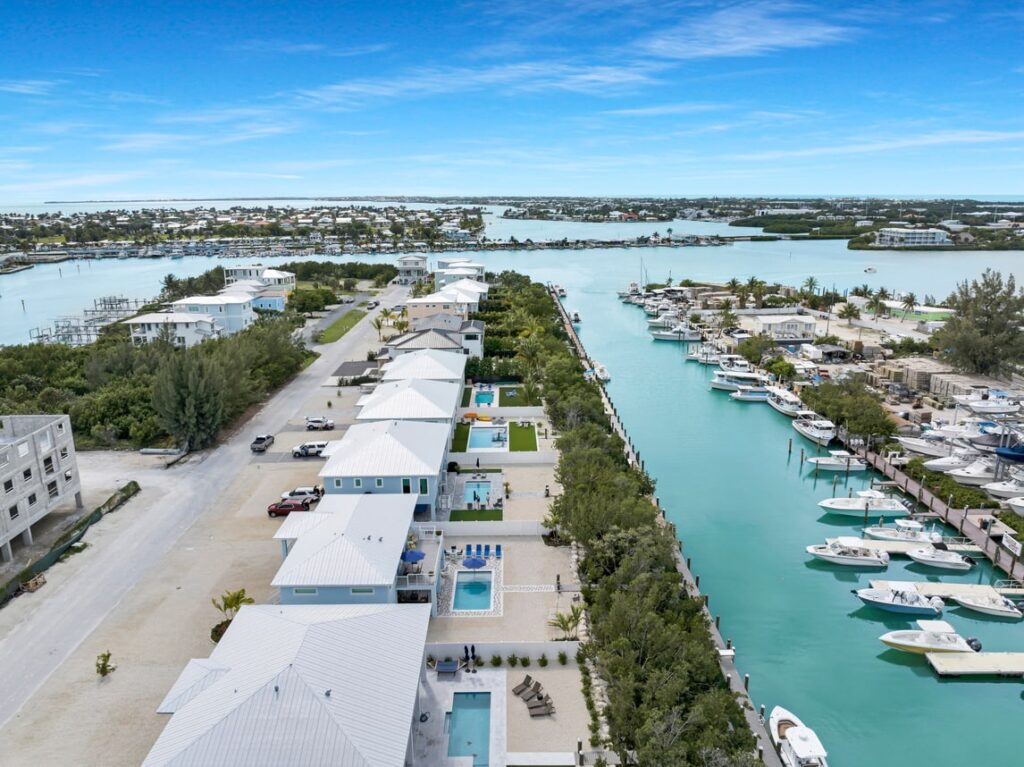
If marine life encounters are a priority for your trip, a waterfront property with a private dock puts you closest to the action. Instead of driving to a boat ramp or booking a charter just to see fish, you’ll have turtles, tarpon, and rays visiting your backyard.
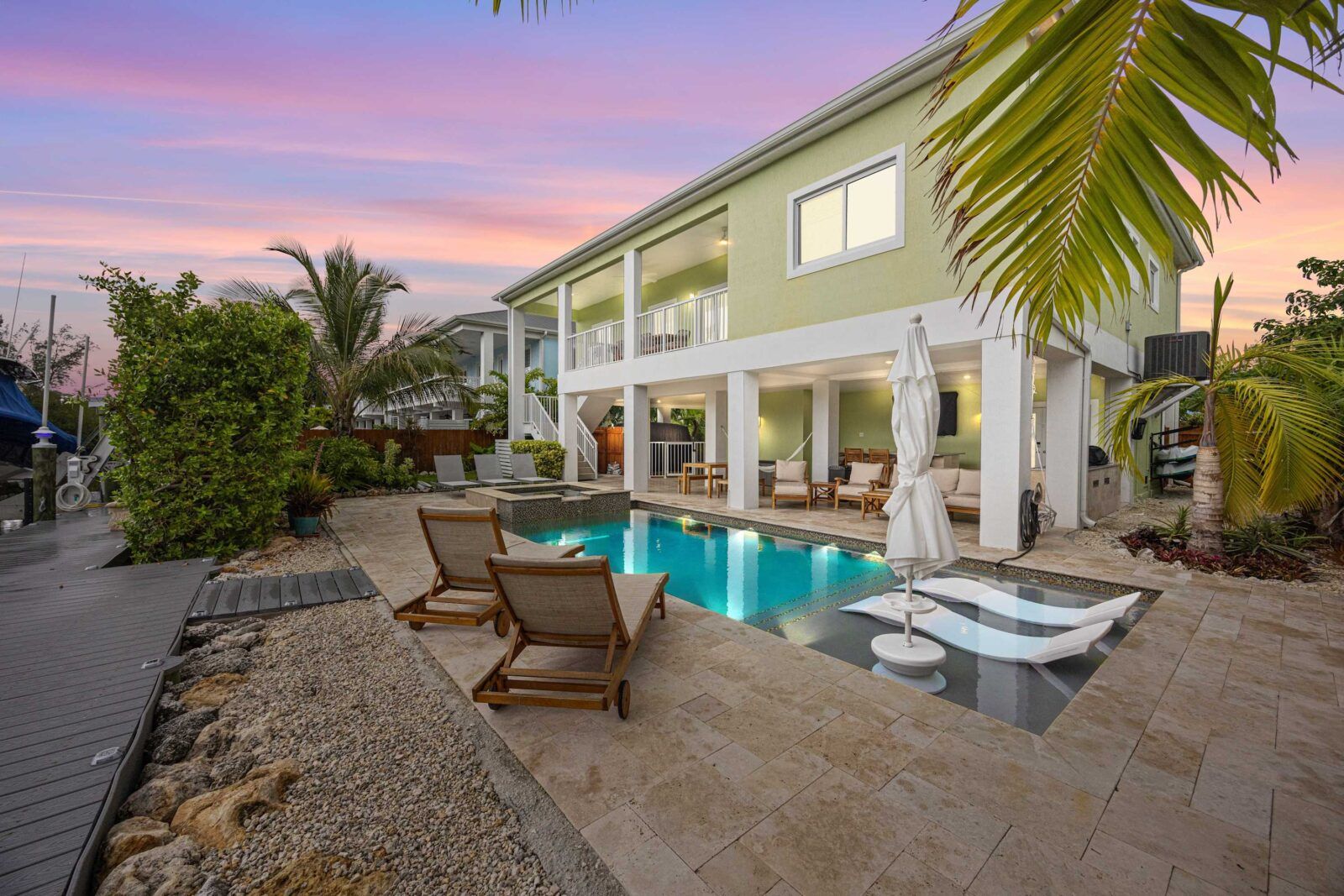
At Villa Paraiso Vacation Rentals, several of our Marathon and Key Colony Beach properties offer deep-water docks, kayaks, and direct canal or ocean access:
- Blue Pearl features a 70-foot private dock ideal for fishing and wildlife watching
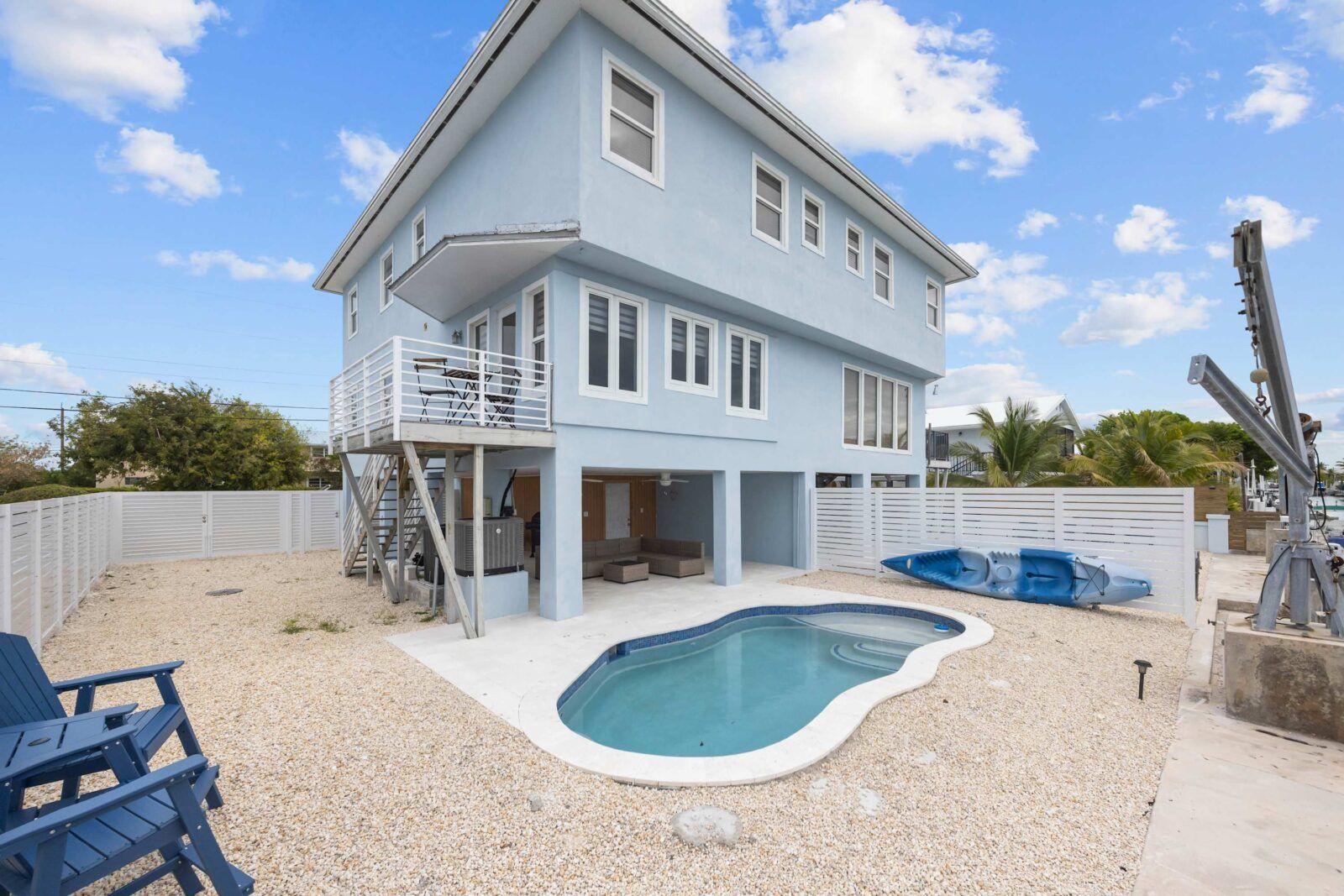
- Emerald Oasis includes complimentary kayaks for paddling mangrove channels and seagrass flats
- Saltwater Social has a 75-foot dock with direct ocean access and a fish-cleaning station for catch-and-release anglers
- Ocean Muse sits on a quiet canal with a heated pool and spa, plus a private dock where guests regularly see dolphins and nurse sharks
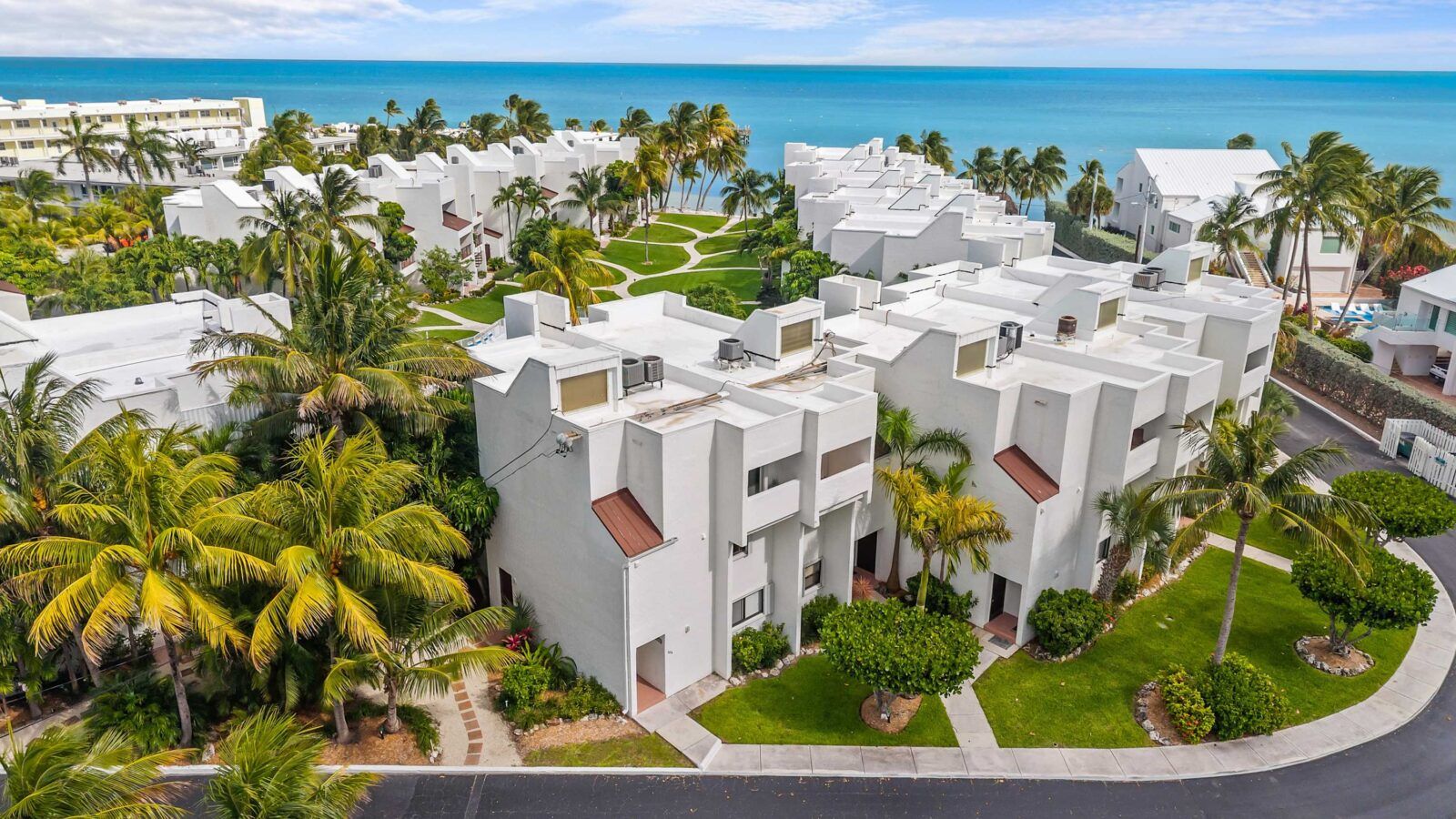
- Vista Del Mar is a three-story oceanfront estate with wide water views and easy access to the reef
All of our properties are located minutes from the Turtle Hospital, Florida Keys Aquarium Encounters, Sombrero Beach, and the region’s best snorkeling reefs.
Browse all of our Marathon and Key Colony Beach vacation rentals or contact us directly at (786) 348-1396 to find the right property for your trip. Use code DIRECT15 for 15% off your first direct booking or DIRECT5 as a returning guest.
FAQ’s
What marine life can you see while snorkeling in Marathon, Florida Keys?
Marathon’s coral reefs support queen angelfish, parrotfish, yellowtail snapper, nurse sharks, spotted eagle rays, moray eels, barracuda, spiny lobster, hogfish, and dozens of other tropical species. Snorkelers at Coffin’s Patch and Delta Shoals regularly encounter these animals in 10-30 feet of water within the Florida Keys National Marine Sanctuary.
Are there sea turtles in Marathon, Florida?
Yes. Five sea turtle species live in Florida Keys waters: Green, Loggerhead, Hawksbill, Kemp’s Ridley, and Leatherback. Green sea turtles are the most commonly spotted in Marathon’s shallow waters and canals. The Turtle Hospital in Marathon has rescued and rehabilitated over 1,500 sea turtles since 1986.
Can you see dolphins from your vacation rental in Marathon?
Bottlenose dolphins are year-round residents in Marathon’s canals and nearshore waters. Guests at waterfront vacation rentals with private docks frequently spot dolphins surfacing, especially during early morning and late afternoon. The Dolphin Research Center on Grassy Key offers up-close educational encounters.
Is it legal to touch coral in the Florida Keys?
No. Touching, standing on, breaking, or removing coral (alive or dead) is prohibited under Florida Keys National Marine Sanctuary regulations. Violations can result in fines. Even minor contact damages the thin living tissue that covers coral colonies, which can take decades to recover.
What is the best month to see marine life in Marathon, FL?
Marine life is present year-round, but each season offers different highlights. Winter brings manatees and clear reef visibility. Spring features tarpon runs and the start of turtle nesting season. Summer sees peak reef fish activity and lobster mini-season. Fall offers warm water, fewer crowds, and migratory species.
Do you need reef-safe sunscreen in the Florida Keys?
Yes. Monroe County banned the sale of sunscreens containing oxybenzone and octinoxate in 2021 because these chemicals contribute to coral bleaching. Visitors should use mineral-based (zinc oxide or titanium dioxide) sunscreens labeled “reef-safe” before entering the water.
Where can you learn about marine conservation in Marathon?
Three key facilities in Marathon offer hands-on marine education: The Turtle Hospital (sea turtle rescue and rehabilitation at MM 48.5), Florida Keys Aquarium Encounters (interactive marine exhibits at MM 53), and the Dolphin Research Center (dolphin research and education at MM 59 on Grassy Key). All three are nonprofit or conservation-focused.